OPEN HOUSE — NO. 04
Preserved Architectural Details
By Amitta Sathitsamphan — Studio Balançoire
25 October 2026
Today I want to talk about old buildings, the ones that have been standing long enough to have more than earned their place. Here’s what nobody says out loud: an old building is never blank. Even when it’s empty, it’s full. Ceilings built tall for a reason, windows cut to catch the light at a particular hour, a staircase worn smooth in the middle by thousands of footsteps. Someone thought carefully about all of that a very long time ago, and then time added its own edits. The cracks, the fading, the slight lean of a doorframe. Those aren’t mistakes, they’re the building’s handwriting.
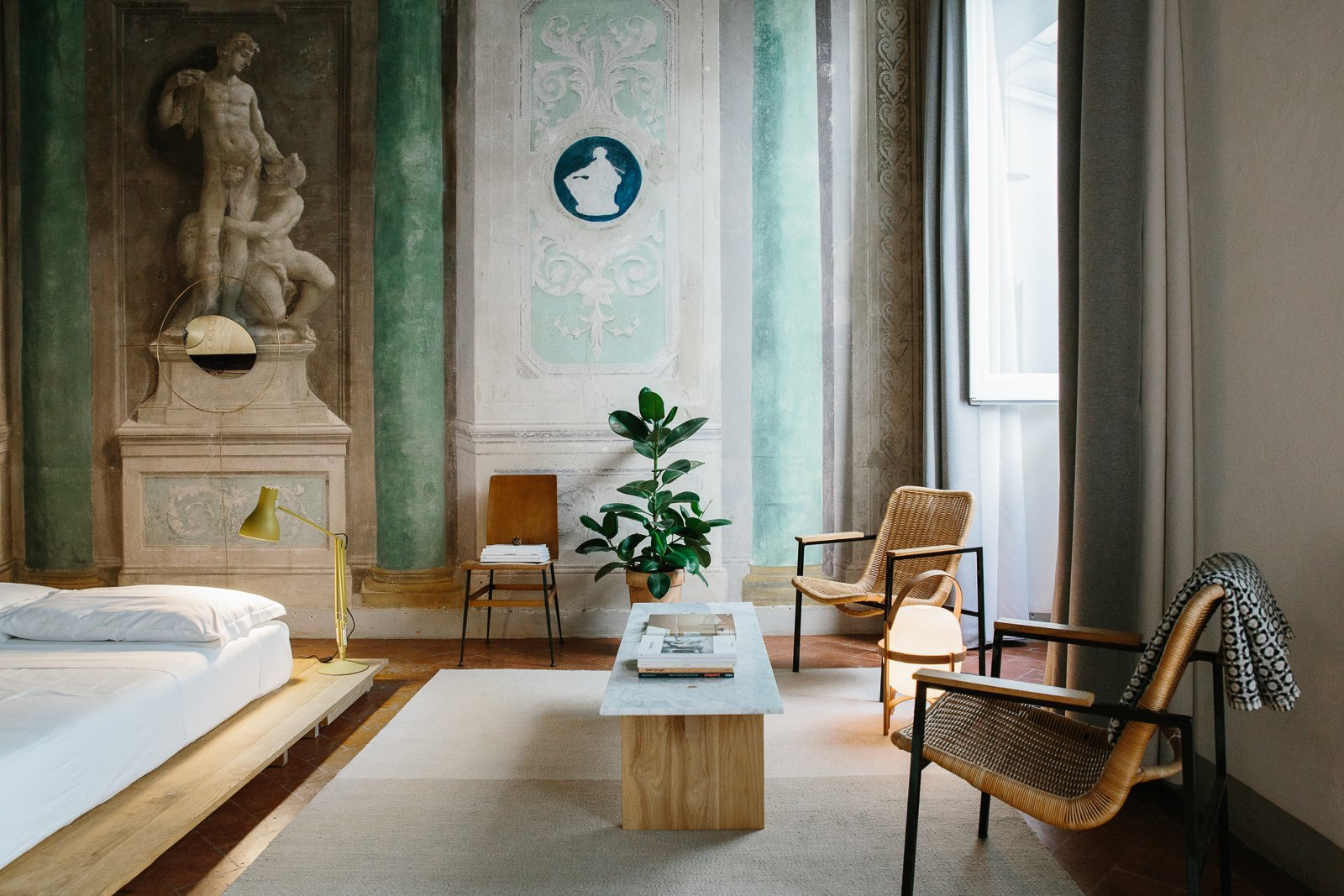
Think of Numeroventi in Florence, with years of life layered into the building and old frescoes still drifting across its walls and ceilings. The ceilings are tall, the kind you tip your head back for, and generous windows pour light into the rooms as if they were being generous on purpose. The lazy move would be to scrape it all back and start fresh. The better move is to leave the walls as they are: the plaster weathered and peeling in places, the frescoes fading at their own pace, nothing forced to look new, because the ageing is part of what they are. Nobody tries to make it look perfect. That’s what moves me. The imperfections aren’t the problem, they’re the point.
So what do you keep, in a home that is probably smaller, less decorative and less architectural? My rule is simple: keep anything that tells the truth about the place. The worn floor, the old moulding, the beam, the tiles, the fireplace, the door with opinions about closing. Repair what’s actually failing — damp, structure, anything that puts the building at risk — but don’t confuse damage with patina. One needs fixing, the other needs leaving alone.
Then there’s the volume, which people forget. Tall ceilings, deep windows, a generous hallway: that’s the building’s grandeur, and it asks very little of you. Don’t lower it, don’t block it, don’t fill it up just because the space is there. And when the daylight goes, keep the lighting soft and low: a lamp or two, maybe a wall light that skims across the old plaster so every crack and brushstroke shows.
Now the fun part: bringing in the new. Against all that history, I like to keep the new quiet and a little shy. A soft palette of off-whites, pale greys and earth tones lets the old walls do the talking and leaves the room feeling calm, almost monastic. Colour is welcome too; I would just keep it subtle: a muted clay, a dusty green, a faded blue that looks like it has always been there.
Then a few pieces, chosen with care: something vintage from the mid-century, new oak floors where they’re genuinely needed, a custom piece by a contemporary maker — or better still, a local one, so a little of the neighbourhood comes into the room too. And if you do add something modern, like a mezzanine or a new partition, let it be clearly new. The best additions don’t pretend to be old. They just stand politely next to what was already there, and sometimes they even help you see the old thing more clearly.
That’s my case for leaving things be. Keep the crack, keep the creak, and invite the new in gently. A room like that doesn’t announce itself. It just feels like it has been lived in for a very long time, in the best possible way.